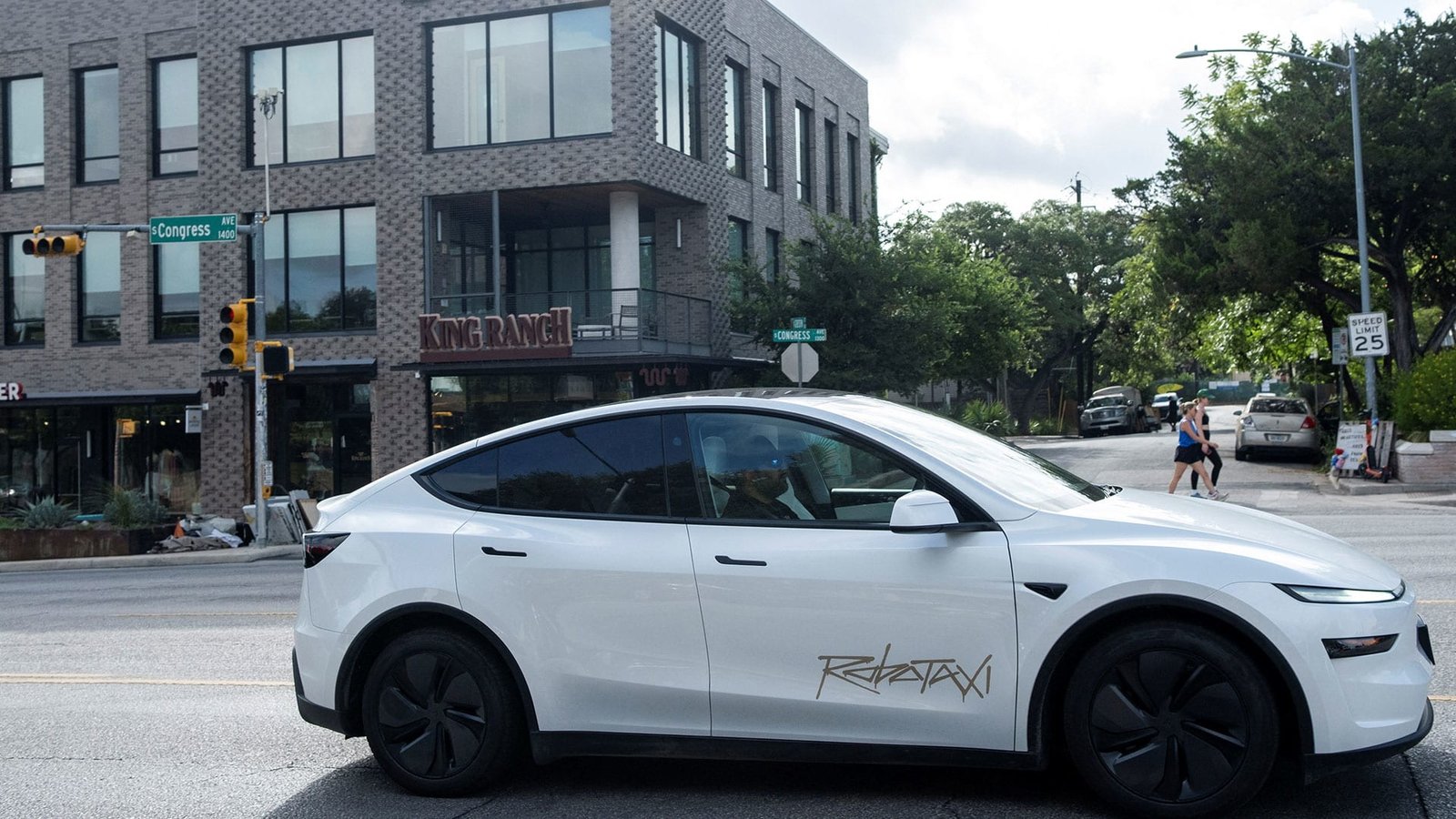
In an unprecedented move, Tesla cars operated without human drivers to transport paying passengers for the first time, a sector Elon Musk views as crucial for the financial future of the electric vehicle company.
Under the new law, operators of autonomous vehicles in Texas must obtain approval from the Department of Motor Vehicles before operating on public roads without a human driver.
A trial run in Austin featured a small fleet of Tesla robotaxis transporting passengers, with social media influencers sharing their experiences and the company closely monitoring the service.
Elon Musk emphasized that safety is a top priority for Tesla’s robotaxis in Austin, and the company is taking careful steps to ensure a secure service within defined areas.
The legislation represents a shift in Texas’ approach to regulating autonomous vehicles, reflecting the state’s evolving stance on self-driving cars.
Obtaining a permit as an “automated motor vehicle” in Texas is relatively straightforward but requires companies to demonstrate their vehicle’s ability to operate legally and safely.
Tesla launched its robotaxi service in Austin after years of anticipation and development, marking a significant milestone in the company’s journey to introduce self-driving technology.
Many analysts believe that Tesla’s stock value relies heavily on the successful implementation of robotaxis and humanoid robots, cementing the company’s position as a leader in the global automobile industry.
- Elon Musk declared that a successful trial in Austin would signify “the end of the beginning
- not the beginning of the end” for Tesla’s ambitions in the autonomous vehicle sector.
If Tesla successfully implements this pilot program, it will still encounter major challenges in expanding rapidly in Austin and other cities, as noted by industry experts.
As the launch of Tesla’s robotaxis nears, the company and its competitors are under close scrutiny by regulators and industry observers due to the risks and costs associated with autonomous vehicles.
Lawmakers in Texas are working on regulations for autonomous vehicles as the industry expands, with Governor Greg Abbott recently signing legislation requiring a state license for operating self-driving vehicles.
The rollout of Tesla’s robotaxis includes strict guidelines to ensure safety, including limited operation under adverse weather conditions and age restrictions for passengers.
Tesla diverges from the norm in the industry by relying solely on cameras instead of a combination of technologies like lidar and radar. Musk argues that this approach is both secure and more cost-effective than those used by competitors.
Experts suggest that it may take years for companies such as Tesla and Alphabet’s Waymo to establish a fully functional robotaxi service, despite recent progress in the field of autonomous driving.