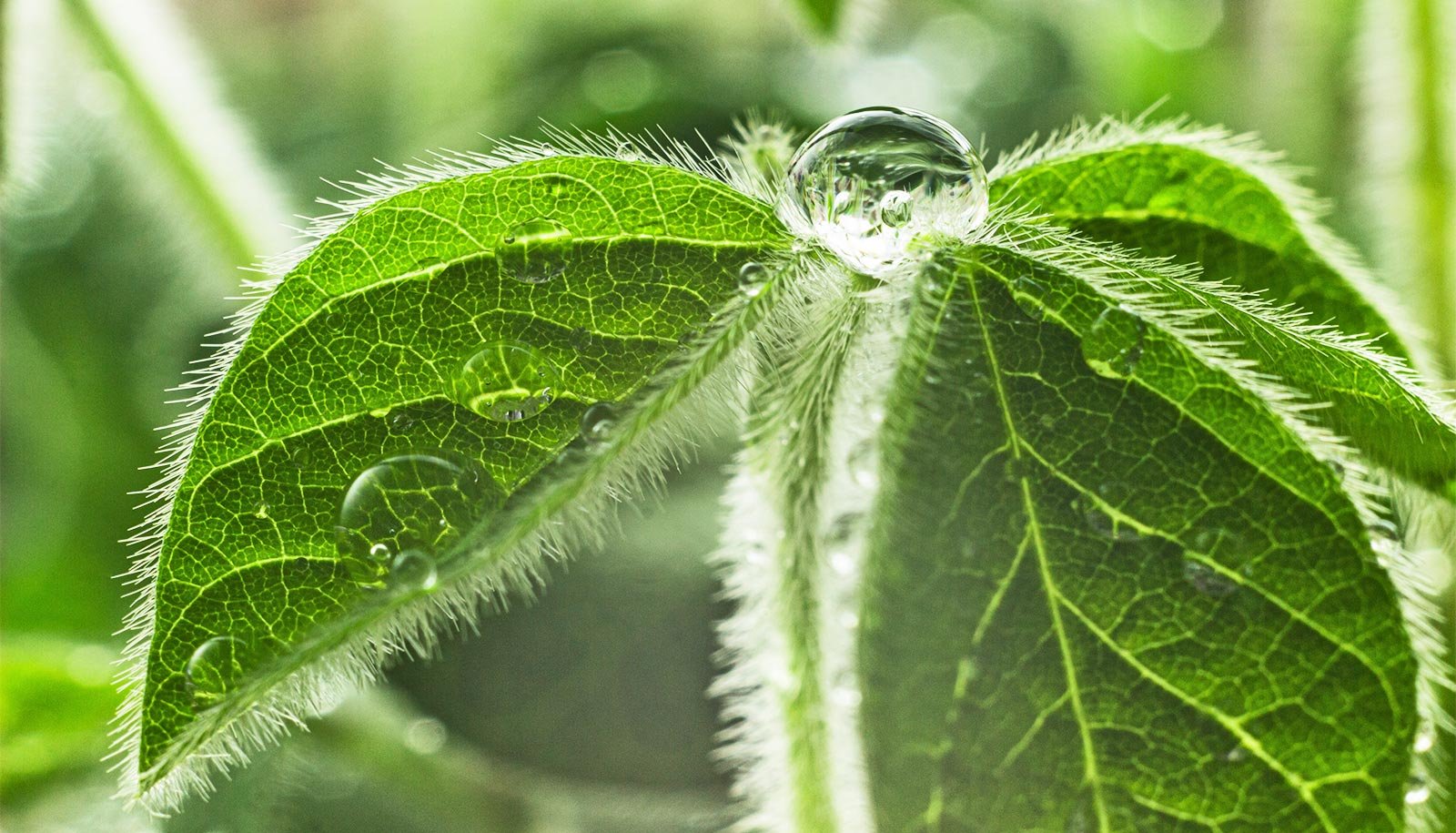
Recent studies have unveiled that soybeans can produce isoprene in response to leaf damage, suggesting a dynamic regulatory mechanism that enables these crops to adapt to stressors efficiently. This newfound ability holds promise for improving crop resilience and pest resistance in agricultural systems, offering a natural alternative to conventional pest management practices.
In an MSU greenhouse experiment, it was observed that whiteflies showed a preference for plants not emitting isoprene, indicating the protective effect of this compound against insects. Tobacco hornworms were found to avoid leaves emitting isoprene, leaving them undamaged, highlighting the role of isoprene in plant defense mechanisms.
Isoprene production varies among plant species, with oak and poplar trees being major producers, particularly in hot conditions. Unlike pine and eucalyptus trees, isoprene is odorless. Further studies are needed to explore how isoprene protects soybeans from stress and whether natural disasters like extreme heat can trigger its production, raising concerns about potential atmospheric impacts.
Isoprene’s repellent effect on insects is not due to the compound itself but rather the biochemical reactions it triggers in plants, such as the increase in jasmonic acid. This molecule interferes with insects’ ability to digest proteins, hindering their growth. The prospects of engineering plants to withstand environmental changes and pest attacks by harnessing isoprene’s properties are promising, offering a potential pesticide-free pest control strategy.
Professor Tom Sharkey, a pioneer in isoprene research, has shed light on the significance of this compound in plant-insect interactions. Over four decades of investigation have revealed isoprene’s role in deterring insects and enhancing plant defense mechanisms, even in non-isoprene-producing plants under stress conditions.
Researchers were surprised to discover two functional isoprene synthase genes in soybeans, challenging the long-held belief that crops like soybeans and corn had lost the ability to produce isoprene over time. This finding underscores the need to understand the broader implications of isoprene emissions on air quality and environmental health.


