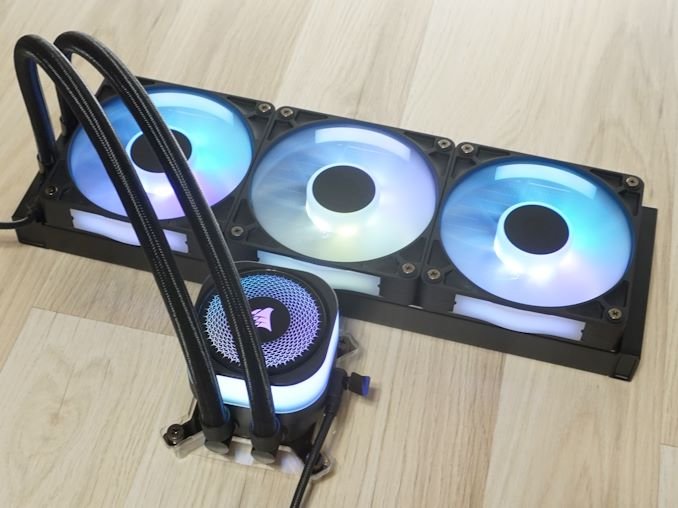
The iCUE LINK TITAN 360 RX RGB boasts a substantial radiator measuring 396 mm in length, necessitating a case capable of accommodating three 120 mm fans consecutively to provide adequate space for the radiator’s bulk. With a thickness of 27 mm, the radiator requires a total allowance of 55 mm when combined with fans for proper installation. Featuring a dual-pass cross-flow design with finely soldered fins onto slim oval tubes, a common characteristic in AIO coolers, the radiator exhibits low airflow resistance due to its modest thickness, suggesting optimization for high performance even with minimal air pressure.
As anticipated, Corsair has included all requisite mounting hardware in the packaging for the iCUE LINK TITAN 360 RX. Separate pouches contain the hardware for AMD and Intel processors, streamlining the installation process. The package also includes the essential iCUE Link Hub, a fundamental component of the iCUE ecosystem crucial for the cooler’s operation.
Corsair, a venerable and esteemed name in the realm of PC components, initially gained recognition through memory-related products. Approximately two decades ago, Corsair ventured into new product categories after careful consideration, initially testing the waters with a limited product range. The subsequent tremendous success of their expansion propelled Corsair to its current stature as an industry powerhouse.
At first glance, the Corsair iCUE LINK TITAN 360 RX RGB AIO cooler may appear akin to many other 360 mm AIO coolers available. However, a closer inspection reveals a distinguishing feature that sets it apart: the absence of loose cables, resulting in an exceptionally neat design. Sporting a standard AIO layout inclusive of a single radiator, two hoses, and a block incorporating a copper CPU contact plate with a miniature liquid pump, the cooler is outfitted with black sleeved, low-permeation rubber tubing, offering greater flexibility compared to other solutions.
The primary block assembly of the iCUE LINK TITAN 360 RX RGB appears substantial and deceptively simple at first glance, concealing intricate design aspects within its squircle structure. The top section, opaque in nature, accommodates numerous LEDs with the capacity to produce captivating lighting effects. The detachable top plate can be rotated to match the cooler’s orientation in any system, offering potential for aesthetic customization, particularly for users with access to 3D printers or CNC machines. The block boasts a sleek design devoid of external cables or connectors.
Once all components are linked and powered up, the iCUE LINK TITAN 360 RX RGB metamorphoses into a mesmerizing light display. LED control is governed through the iCUE LINK interface, enabling personalized lighting effects via Corsair’s iCUE software. Leveraging the advanced functionalities of the iCUE software, users can select from an array of programming options, ranging from simple visual effects to practical, objective-oriented lighting schemes, such as temperature-based color schemes and alerts. The iCUE LINK module, in conjunction with the iCUE software, facilitates seamless integration across all compatible Corsair devices, offering innovative inter-device control options. For example, users could configure the function row of a compatible keyboard to function as a lighting indicator for the cooler’s fan RPM or synchronize the cooler’s lighting with the active profile on a Corsair mouse.
One of Corsair’s significant triumphs lies in the domain of all-in-one (AIO) liquid coolers. Their success in this field is particularly noteworthy considering their initial foray into liquid cooling in 2003 fell short of expectations. Undeterred by this setback, Corsair persevered and regrouped, seizing the burgeoning demand for user-friendly, maintenance-free AIO designs. This strategic move paid substantial dividends, as AIO coolers now stand as one of Corsair’s premier product lines, showcasing a diverse range of models.
On closer examination, we observed that the iCUE Link Hub necessitated a 6-pin PCI Express connector for power supply. Corsair likely opted for this configuration to spare users the inconvenience of using a Molex cable solely for the hub. This choice aligns well with the assumption that most individuals investing in the iCUE LINK TITAN 360 RX possess a potent PSU equipped with spare PCI Express connectors, particularly given the prevalence of 12VHPWR/12V-6×6 connectors for contemporary graphics cards. However, in situations where users have just enough PCI Express connectors for their GPUs, they might need to upgrade their power supply or resort to using Molex-to-PCIe adapters. Including an adapter or alternative power provision would have been a thoughtful addition, considering the hub’s modest power requirements.
We had the opportunity to experience the new iCUE LINK TITAN 360 RX, which arrived in a sizable cardboard box, accurately reflecting the cooler’s considerable size. True to Corsair’s branding, the packaging featured their trademark black and yellow color scheme. The box showcased a vibrant image of the iCUE LINK TITAN 360 RX, offering us a glimpse into its aesthetic appeal. Upon unboxing, we found the cooler and its components snugly nestled in custom-designed cardboard inserts, ensuring they were well-protected during transit.
Today, we’re exploring Corsair’s most recent addition to their line of AIO coolers: the iCUE LINK TITAN 360 RX. This particular model bears similarities to the iCUE LINK H150i RGB, yet it introduces subtle but notable enhancements, such as an improved pump for superior performance. The TITAN 360 RX upholds Corsair’s tradition of innovation and excellence, seamlessly integrating into the iCUE system to provide an optimized user experience. With its streamlined single-cable design, installation is effortless and straightforward, distinguishing it within Corsair’s expanding range of coolers.
The iCUE LINK TITAN 360 RX RGB cooler features a squircle copper contact plate at the base of the block, secured with eight screws. While the plate’s surface may not be polished to a mirror finish, it’s designed for optimal thermal energy transfer. Corsair has pre-applied their XTM70 thermal paste to the contact plate, ensuring superior thermal conductivity that enhances the cooler’s overall efficiency. The only drawback is that the pre-applied paste limits users to a single installation, underscoring the importance of getting it right on the first attempt and necessitating users to procure additional thermal compound in case of the need to reseat the cooler.
Corsair has thoughtfully included three RX120 RGB fans pre-installed on the radiator, and remarkably, there are no visible wires in sight. These fans feature a distinctive design with connectors on the sides of their frames for direct connection. A single cable connects the fans to the hub, providing power and ARGB/speed control. Equipped with LEDs positioned behind diffusers on all sides, including the inner rim, the fan frames create a striking lighting effect. Additionally, a small sensor is mounted on one of the fan supports. These fans utilize magnetic levitation motors, a rare yet highly reliable and quiet choice, offering an extensive operational range of 300-2100 RPM. The primary difference between this cooler and the iCUE LINK H150i RGB lies in the fans, as the former version featured QX120 fans with a maximum rotational speed of 2400 RPM. Moreover, the decorative plates on the fan sides are detachable and can be removed if desired.